
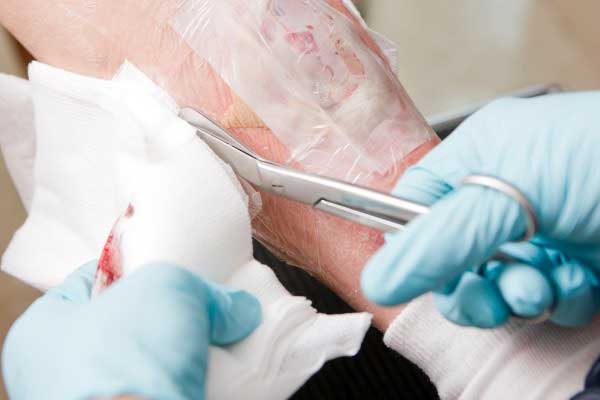
In celebration of Wound Healing Awareness Month (June), we highlight the importance of treating chronic wounds, which you can get medically examined at the Palomar UC San Diego Health Wound Healing & Hyperbaric Centers located in San Marcos and Poway. Non-healing wounds, especially chronic wounds, require in-person treatment, and you shouldn’t delay visiting a wound care facility.
If you’re experiencing a chronic wound, you’re not alone. The National Institutes of Health (NIH) states that approximately 6.7 million people live with chronic wounds, a number that will likely increase–fueled by an aging population and rapidly inclining rates of diseases and conditions such as obesity, diabetes, and effects of radiation therapy.
Defined as a wound that has not healed in four weeks, a chronic wound requires specialized treatment. Associated with improperly functioning veins, poor blood circulation, and inability to move with full range of motion, chronic wounds can lead at best, to a lower quality of life and at worst, amputations.
When your wound persists for a month, a calculated treatment is required for healing. To begin, you can make an appointment straight away with a Palomar UC San Diego Health Wound Care facility rather than schedule a visit with your primary care physician first for a referral.
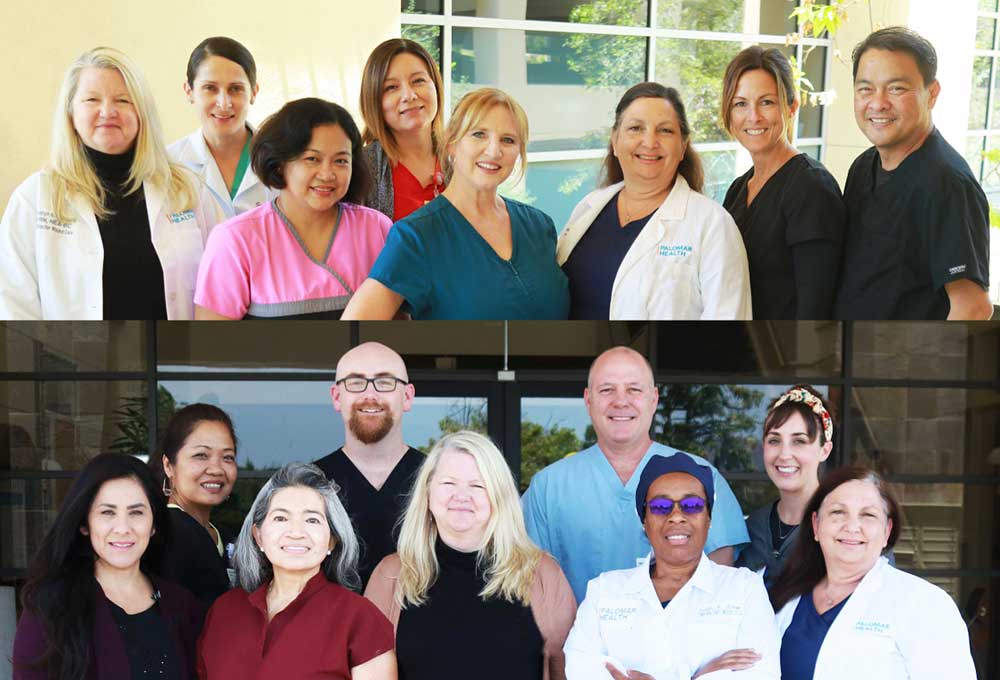
We set up a comprehensive chronic wound treatment program,” says Palomar UC San Diego Health District Director of Wound Care Carolyn Masengale, DNP, RN, NEA-BC. “This includes all proper referrals, case management and communications, so that all offices are aware of what and how you’re doing.”
Caused often by diabetic neuropathy, vascular issues, osteomyelitis (an infection of the bone) and post-op surgical wounds not healing as they should, chronic wounds get treated in a number of ways, including the following:
- Advanced skin substitutes, which is “live skin we get from manufacturers,” says Masengale.
- Compression therapy, a specialty dressing that increases pressure in the tissue beneath the skin. This is often used for diabetic and osteomyelitis patients.
- Hyperbaric medicine—an oxygen therapy in which a patient’s blood plasma becomes saturated, carrying 15 to 20 times the normal amount of oxygen to the body’s tissues. This allows the body’s wound-healing mechanisms to better function. However, Masengale says hyperbaric medicine isn’t a first-resort treatment. Rather, you must meet approval to undergo it.
With this broad treatment management, the Wound Care Centers at Palomar UC San Diego Health have a healing rate of 92 percent. The multidisciplinary team includes a podiatrist, plastic surgeon, vascular surgeon, and physicians who specialize in wound care and hyperbaric medicine.
For more information on wound healing, please visit the Palomar UC San Diego Health website.
Caption: Wound Being Dressed; Palomar UC San Diego Health Wound Healing & Hyperbaric Centers Staff (Top – Poway, Bottom – San Marcos)