
A stroke is a condition that occurs when blood flow to part of the brain is completely blocked causing tissue to die. This condition can be diagnosed by a CT scan, an MRI and on clinical signs the patient may be exhibiting. It is critical to call 911 immediately after recognizing symptoms because a stroke is a medical emergency. Only 20-25% of the patients who are admitted to the hospital with a stroke arrive in the emergency department within 3 hours of the onset of symptoms. The earlier you are treated after the onset of symptoms, the more likely the intervention will prevent further damage. While there is no guarantee that timely arrival at the hospital will insure a good outcome, treatment with clot busting therapy can only be given within the first hours of a stroke.
In some instances, patients will say that their symptoms went away after an initial episode. This event is often called Transient Ischemic Attack (TIA). A TIA occurs when blood flow to part of the brain is blocked but then opens up causing the symptoms to go away. Approximately half of the people who experience a TIA are unaware of the event. A TIA is also called a “mini stroke” or a “warning stroke” since approximately 1/3 of patients experiencing a TIA go on to have a stroke within 1 year. Like a stroke, a TIA is a medical emergency and the patient should be evaluated in an emergency department as soon as possible.
Warning Signs of a Stroke
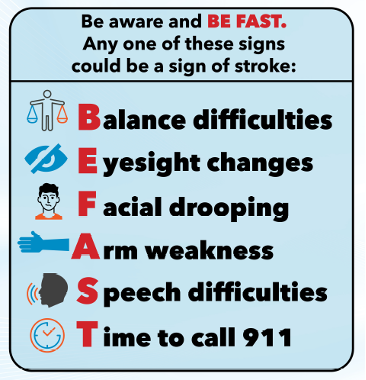
- Sudden numbness or weakness of the face, arm or leg, especially on side
- Sudden confusion, trouble speaking or understanding
- Sudden trouble seeing in one or both eyes
- Sudden trouble walking, dizziness, loss of balance or coordination
- Sudden severe headache with no known cause
Risk Factors for Stroke
There are several factors that can lead you to have a higher risk of stroke. Some of the risk factors include:
- Hypertension
- Hypercholesterolemia
- Diabetes
- Afib
- Age
- Male Sex
- Smoking
Stroke Facts: Did you know?
- About 795,000 Americans will experience a new or recurrent stroke this year.
- Every 40 seconds, someone in the U.S. has a stroke.
- About 1 in 4 stroke survivors is at risk of another stroke.
- African Americans, Hispanics and people age 55+ are at most risk of stroke.
- Stroke is more common in women as they get older.
- There are nearly 7 million stroke survivors in the U.S.
- Stroke is the 5th leading cause of death in the U.S.
- Nearly 2 million brain cells die each minute a stroke goes untreated.
- Up to 80 percent of strokes are preventable.
Stroke Prevention
Maintaining cardiovascular health is key to preventing strokes. See the 8 tips below to improve your cardiovascular health:
- Have a Healthy Diet
- Be More Active
- Quit Tobacco
- Get Healthy Sleep
- Manage a Healthy Weight
- Control your Cholesterol
- Manage Your Blood Sugar Levels
- Manage Your Blood Pressure